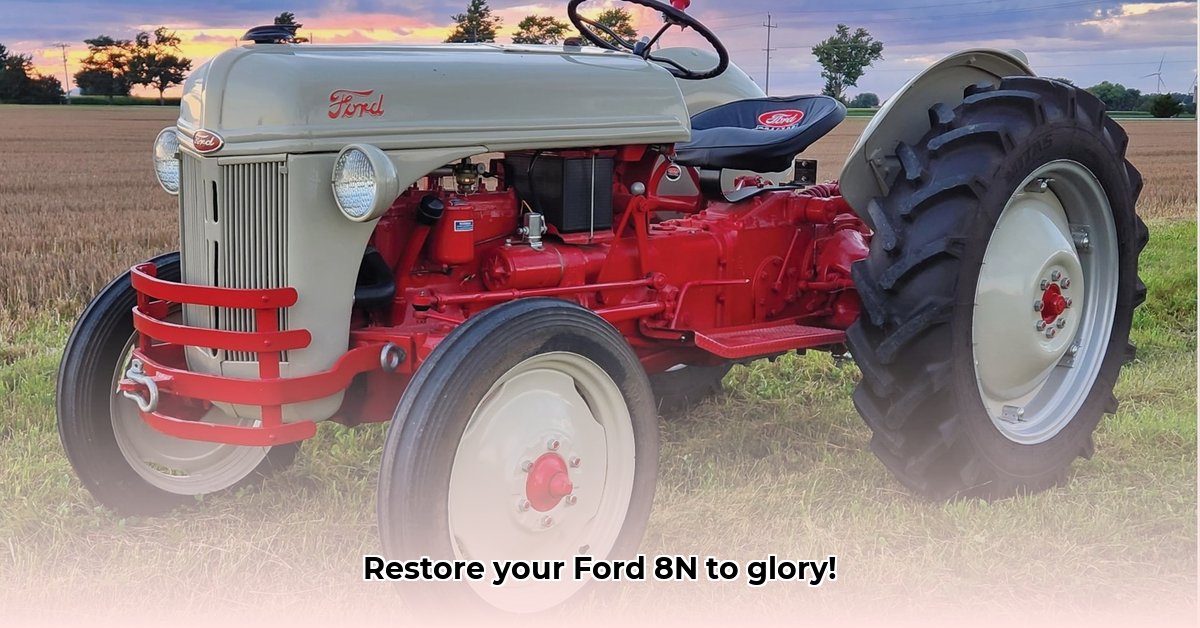
A Piece of Farming History
The Ford 8N tractor, produced from 1947 to 1952, wasn't just another farm implement; it revolutionized agriculture. Over 500,000 units were manufactured, making it a ubiquitous sight across American farms. Its relatively affordable price and robust design brought mechanized farming within reach for many, replacing horse-drawn equipment. This accessibility, coupled with its reliability, cemented its legendary status. But what exactly made the Ford 8N so impactful? Let's delve into its history and the rewarding process of restoring one today. Did you know that its simple design and readily-available parts contributed significantly to its widespread adoption? For more Ford tractor information, check out these Ford tractor specs.
Getting to Know Your Ford 8N's Inner Workings
The Ford 8N's engine is its beating heart. Early models boasted gasoline power, while later versions offered a diesel alternative. Both provided roughly 20 horsepower at the Power Take-Off (PTO) – impressive for its time. The four-speed transmission, though basic by modern standards, proved remarkably durable. Its simple yet effective hydraulic system provided the necessary lift power for farm implements. The three-point hitch system streamlined implement attachment, a significant advancement over older methods. Understanding these core components is fundamental to any restoration project. How many hours do you estimate a typical restoration project will take?
Keeping Your Ford 8N Running Smoothly: Routine Maintenance
Regular maintenance is paramount. A well-maintained 8N rewards its owner with years of faithful service. Consider this preventative maintenance your investment in the longevity of this classic machine.
- Oil Changes: Replace engine oil and filter according to the owner's manual. Fresh oil is crucial for preventing wear and tear.
- Lubrication: Regularly grease all fittings to reduce friction and prolong component lifespan.
- Fluid Checks: Monitor coolant, transmission, and hydraulic fluid levels, topping them off as needed.
- Visual Inspections: Regularly check belts, hoses, and wiring for signs of wear or damage. Early detection prevents costly repairs.
Troubleshooting: Tackling Common Ford 8N Problems
Even with diligent care, issues can arise. Here's how to troubleshoot common problems:
- Engine Starting Issues: Begin by checking the battery charge, fuel supply, and ignition system.
- Hydraulic Problems: First check the fluid level; low levels indicate a leak. More complex malfunctions may require professional assistance.
- Transmission Issues: Low transmission fluid is a common cause; worn gears represent a more serious problem.
Finding Parts for Your Ford 8N: A Surprisingly Easy Task
Sourcing parts is easier than expected.
- Online Retailers: Numerous online retailers specialize in Ford 8N parts.
- Local Suppliers: Check local agricultural supply stores.
- Online Communities: Forums and clubs connect owners and enthusiasts, offering valuable part-finding advice and support.
- Used Parts: Don't dismiss used or rebuilt parts – a cost-effective option for many components.
Restoring Your Ford 8N: A Rewarding Journey
Restoring a Ford 8N is a challenging yet deeply satisfying project. It combines mechanical skill with a passion for history.
Step-by-Step Restoration:
- Disassembly: Methodically disassemble the tractor, meticulously documenting each step with photos and notes.
- Cleaning: Clean each part thoroughly, removing grease and rust.
- Repair/Replacement: Repair salvageable parts and replace those beyond repair.
- Reassembly: Carefully reassemble the tractor, guided by your documentation.
- Testing: Test all systems to ensure proper function.
Collector's Value and the Market for Ford 8N Tractors
The current market value of a Ford 8N depends on condition, originality, and completeness. Online resources, auction sites, and collector guides can provide price estimates. A meticulously restored 8N can command a substantial price. What factors influence the price most significantly?
How to Restore a Ford 8N Tractor Engine (A Deep Dive)
Key Takeaways:
- Engine restoration requires time, patience, and resources.
- A systematic approach, beginning with a comprehensive assessment, is crucial.
- Access to parts is essential.
- Online communities provide invaluable support.
- Expect unexpected challenges; flexibility is key.
Assessing Your Ford 8N Engine
A thorough assessment is the first step. This involves a detailed inspection, documenting rust, seized components, missing parts, etc. Photography is crucial for reference during reassembly.
Disassembly and Cleaning
Methodically disassemble the engine, meticulously labeling each part. Thoroughly clean all components to remove grease and rust.
Parts Sourcing
Many online suppliers cater to Ford 8N enthusiasts. Local tractor supply stores may also have parts.
Engine Block Restoration
Address any rust and corrosion on the engine block. Minor damage can be cleaned and repainted; major damage might necessitate welding or replacement.
Rebuilding the Engine
Follow your service manual carefully. Use new gaskets and seals.
Testing and Fine-Tuning
Thoroughly test the reassembled engine, checking for leaks and unusual noises. Fine-tune as needed.
Common Problems and Solutions
- Seized Components: Use penetrating oil and careful force.
- Rust: Use wire brushing, sanding, and repainting.
- Cracked Cylinder Heads: Welding or replacement might be necessary.
- Timing Issues: Consult your manual and verify timing multiple times.
Resources for Further Learning
A detailed Ford 8N service manual is essential. Online forums, such as Yesterday's Tractors (https://www.yesterdaystractors.com/), are invaluable resources.